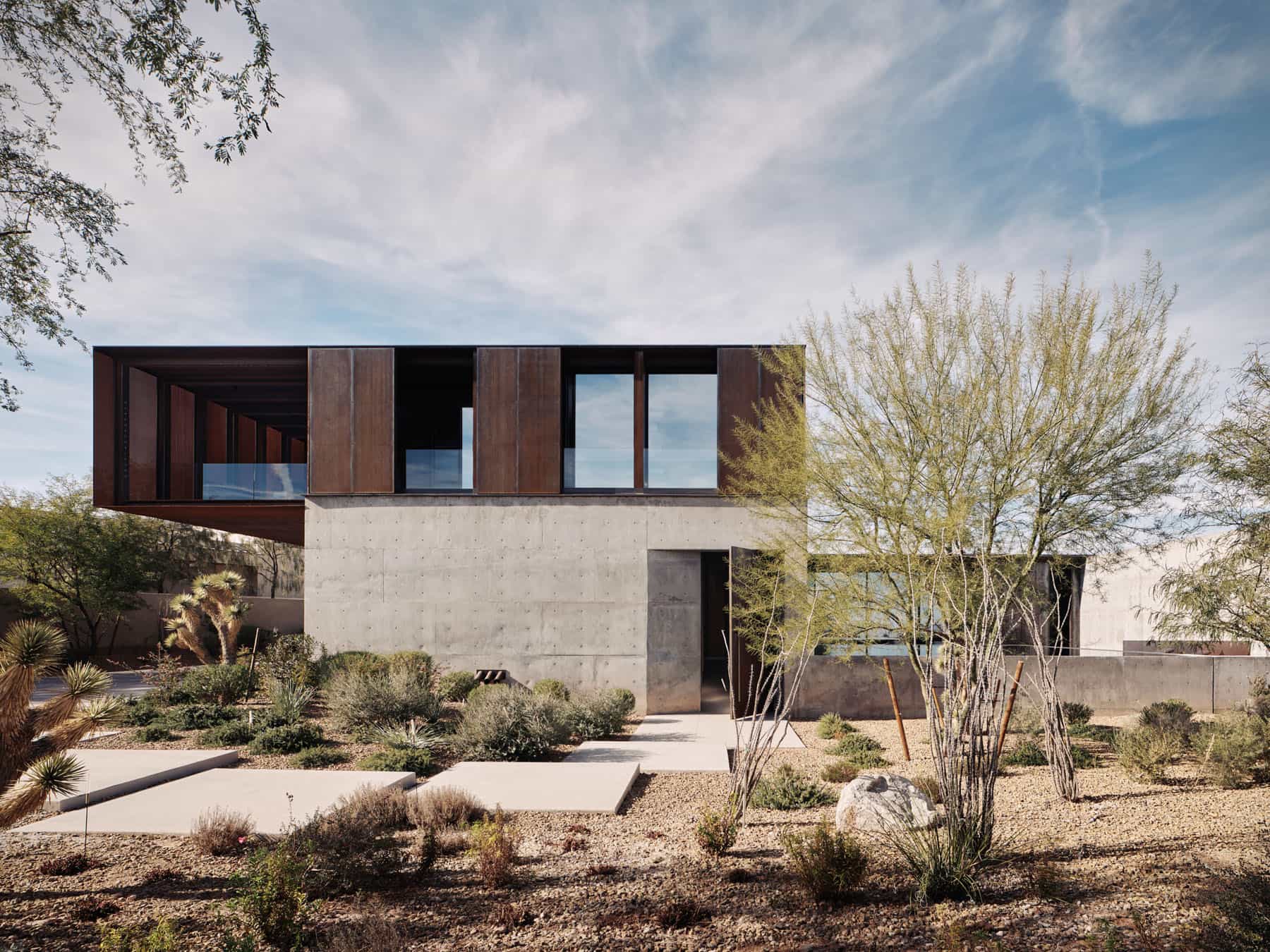
In the mesmerizing landscape where the neon lights of Las Vegas meet the stark beauty of Red Rock Canyon, Faulkner Architects has crafted a home that epitomizes both resilience and sophistication. Nestled in this unique setting, the Red Rock residence masterfully integrates the raw elements of the desert with the elegance of urban design, offering a seamless blend of indoor and outdoor living.

Designing for Extremes
Faulkner Architects faced the formidable challenge of designing a home that could withstand the diverse extremes of the Red Rock site. Greg Faulkner, the principal architect, explains, “The architecture represents a contextual conversation between the desert landscape and the city.” The design brief emphasized the need for a climate-responsive architecture that could endure cold, dry winters and scorching, hot summers.
The residence’s robust design strategy incorporates weather protection measures while preserving a quality of space that visually and physically connects with the land. The architecture of Red Rock is a testament to a search for a built environment that mirrors the behaviors of the desert, creating a residence that seems to emerge organically from its surroundings.

Upon approach, Red Rock presents as a formidable structure composed of large, geometric volumes. A heavy concrete podium supports a sleek metal box, reflecting the layered iron ore of the local geology. This choice of materials—locally sourced aggregates and steel cladding—maintains a tonal relationship with the surrounding mountains.
The entry experience is as understated as the material palette. A narrow aperture carved into the concrete marks the entrance to the concealed interior, while a large water basin reflects the distant cityscape, offering a subtle commentary on the ephemeral nature of urban development.

Seamless Integration of Indoor and Outdoor Spaces
Red Rock’s layout is designed to foster a fluid transition between indoor and outdoor environments. The home unfolds over three levels, with half of its area embedded below ground. The ground level features a prolonged entry sequence leading to a small, sky-lit courtyard adorned with native planting.
The primary living spaces are organized around a central courtyard, enabling an effortless flow between indoor and outdoor areas. Glass doors retract into pockets within the concrete structure, creating a seamless connection between the interior and the expansive outdoor terrace.

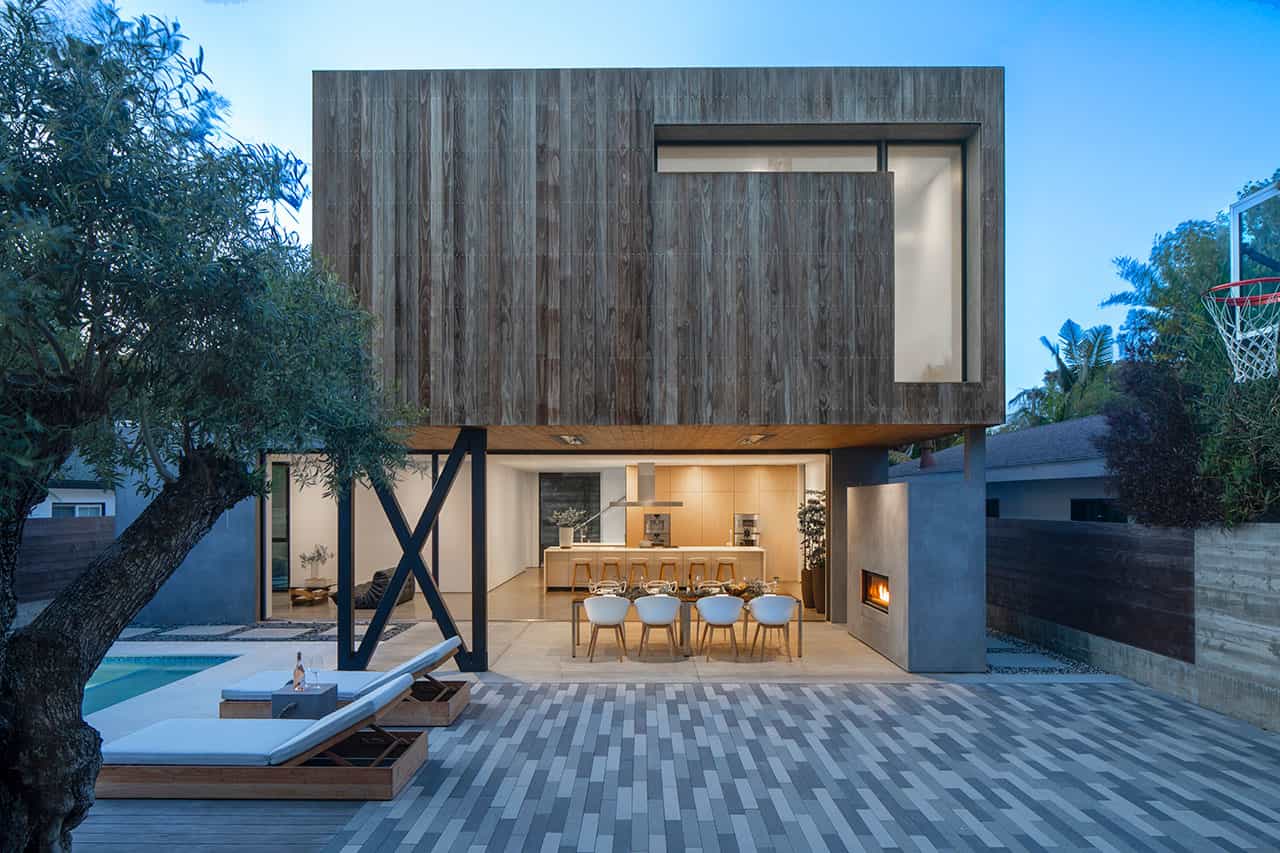
The home’s east-oriented exterior space is designed through a subtractive process, resulting in a semi-enclosed courtyard that shields from strong winds. The elevated pool mirrors the dimensions of the primary living space, while steps descend to a planted terrace for outdoor lounging and dining.
The design’s commitment to sustainability is evident in the pool’s dual function as a passive cooling element and the responsible choice of low-water-usage vegetation. Entorno Arquitectura de Paisaje, the landscape architect firm, selected desert plants that reinforce the home’s sustainable design ethos and contribute to site regeneration.

Private Retreats and Panoramic Views
On the upper level, the cantilevered metal box houses bedrooms oriented along an east-west axis, providing privacy through perforated metal screens. This level includes an exterior terrace that not only offers breathtaking views of the city and Red Rock Canyon but also protects the pool area from the harsh desert sun and intense winds.
Beneath the pool, submerged openings introduce natural light into the entertainment spaces below, enhanced by the calming blue glow of the water above. This thoughtful design element contributes to the home’s overall sustainability and aesthetic appeal.

The Red Rock residence by Faulkner Architects stands as a remarkable example of how architecture can harmonize with its environment, offering a robust yet elegant response to the demands of desert and urban living. The successful integration of diverse functional and aesthetic elements demonstrates the home’s ability to adapt to both natural and human-made conditions.
In reflecting on the project, Faulkner notes, “The terrace was relatively calm, on the leeward side of the form,” illustrating the design’s resilience and adaptability. Red Rock is a testament to the power of architecture to create meaningful and enduring connections with its surroundings.