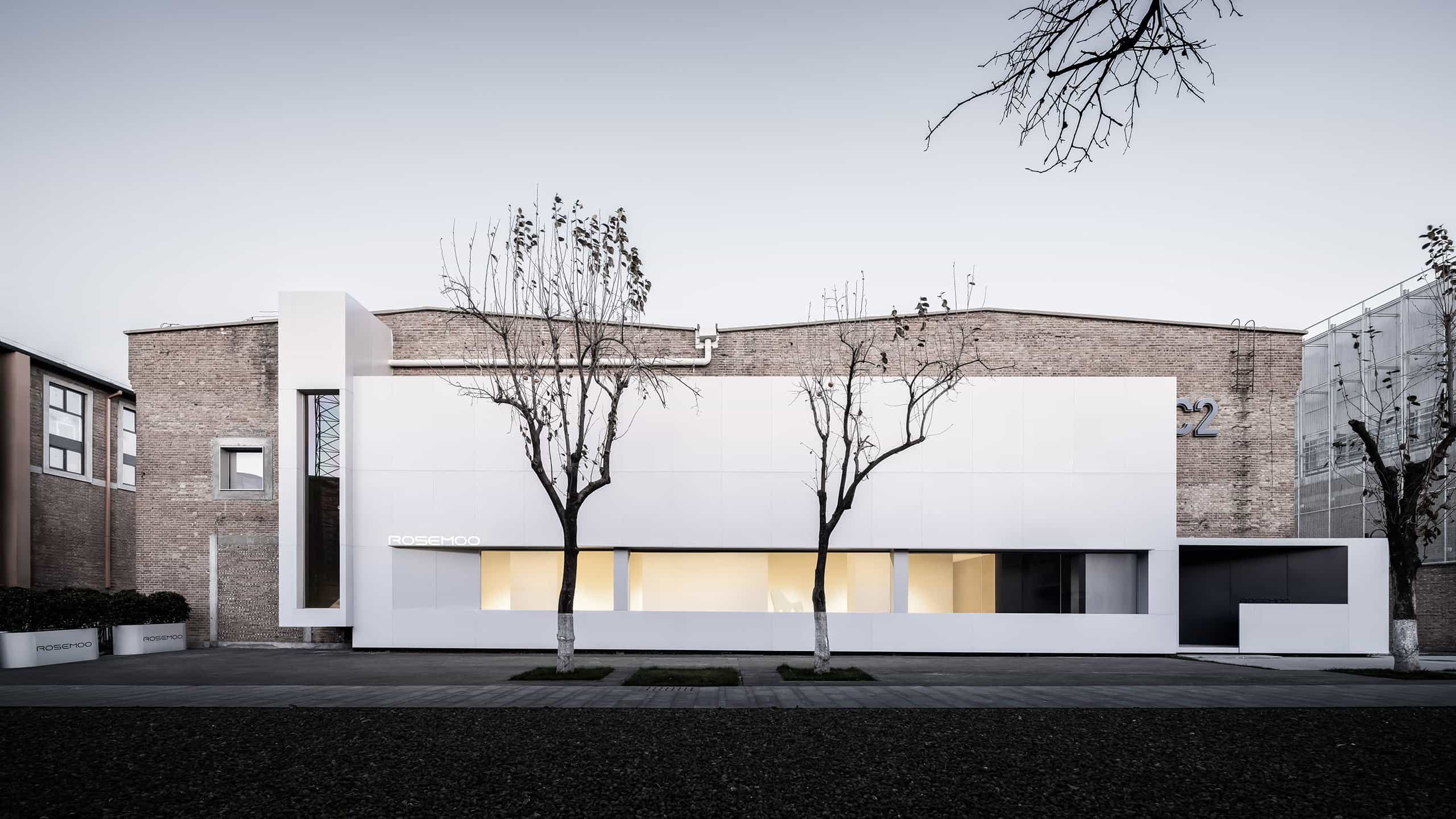
The transformation of an industrial relic into a cutting-edge workspace epitomizes the brilliance of modern design. CUN DESIGN’s recent project, the new headquarters for Chinese clothing brand Rosemoo in Beijing, seamlessly merges minimalist aesthetics with the raw charm of a 1970s textile warehouse. This article delves into the nuanced elements of this architectural marvel, showcasing its innovative design and spatial ingenuity.

Project Overview
Project Name: ROSEMOO Headquarters Office
Location: Beijing, China
Interior Designer: CUN DESIGN
Area: 1540 sqm
Completed: September 2023
Industrial Heritage Meets Modern Design
The project is situated in a revitalized industrial site in Beijing’s Chaoyang District. CUN DESIGN has masterfully preserved the building’s original concrete and masonry structure, juxtaposing it with sleek, white geometric volumes. These pristine forms stand out against the weathered brickwork, creating a visual dialogue that honors the past while embracing the future.

The exterior renovation introduces a series of rectilinear volumes that protrude from the masonry facades. These volumes, featuring clean cut-outs for doors and windows, inject a modern dynamism into the building’s industrial exterior. The contrast between the new white forms and the aged brickwork highlights the creative reuse of the structure.
Taking advantage of the building’s inherent open-plan layout, the designers introduced a new spatial arrangement free from traditional constraints. Central to this layout is an imposing cylindrical volume that anchors the building’s interior.

At the heart of the building, this cylindrical structure houses a large retail showroom on the ground floor. Above it, elliptical volumes contain meeting rooms and tea rooms, creating a layered and immersive spatial experience. Accessed through an elongated lobby, the circular showroom is an ethereal space enhanced by concealed ambient lighting, producing dreamy halo effects.
Contrast and Cohesion
Inside, the interplay of curved and rectilinear forms is complemented by the exposed concrete structure, creating a compelling visual tension. This design is further accentuated by vertical and horizontal bands of windows and skylights, strategically placed to guide natural light into the interior.

The meeting rooms and tea rooms on the first floor are set on a raised platform, adding a ceremonious touch to these spaces. The careful placement of windows and skylights ensures that every corner of the building is bathed in natural light, enhancing the overall aesthetic of minimalist sophistication.
Creative Reuse and Innovation
The new Rosemoo headquarters stands as a beacon of creative reuse and spatial innovation. It exemplifies how industrial spaces can be transformed into modern, functional environments without losing their historical essence. By retaining elements of the original warehouse and integrating them with contemporary design principles, CUN DESIGN has created a headquarters that is both functional and inspiring.

The Rosemoo headquarters is a masterclass in spatial fluidity and geometric purity. CUN DESIGN’s innovative approach has resulted in a workspace that not only reflects the brand’s minimalist ethos but also serves as a stunning example of how industrial heritage can be seamlessly blended with modern design. This project stands as a testament to the power of creative reuse and the enduring appeal of minimalist design.

CUN DESIGN’s transformation of the Rosemoo headquarters in Beijing showcases the potential of creative reuse in modern architecture. By merging the building’s industrial heritage with minimalist aesthetics, the designers have created a space that is both inspiring and functional. This project not only underscores the timeless allure of minimalist design but also highlights the importance of innovative architectural solutions in preserving and revitalizing urban industrial relics.